Ceramic
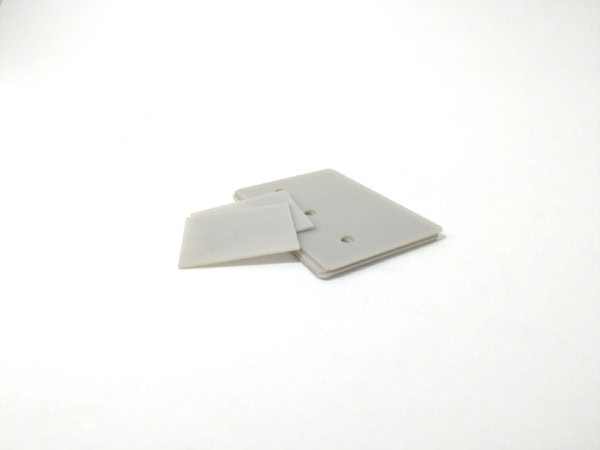
Ceramic
Ceramic Heat Spreader
| Properties | Thermal Conductivity | Dielectric Breakdown Voltage | Bulk Density | Flexural Strength | Thermal Expansion Coefficient | ||
|---|---|---|---|---|---|---|---|
| Unit | W/m•K | cal/cm·sec·°C | KV/mm | g/cm3 | Kgf/cm2 | 10-6 | |
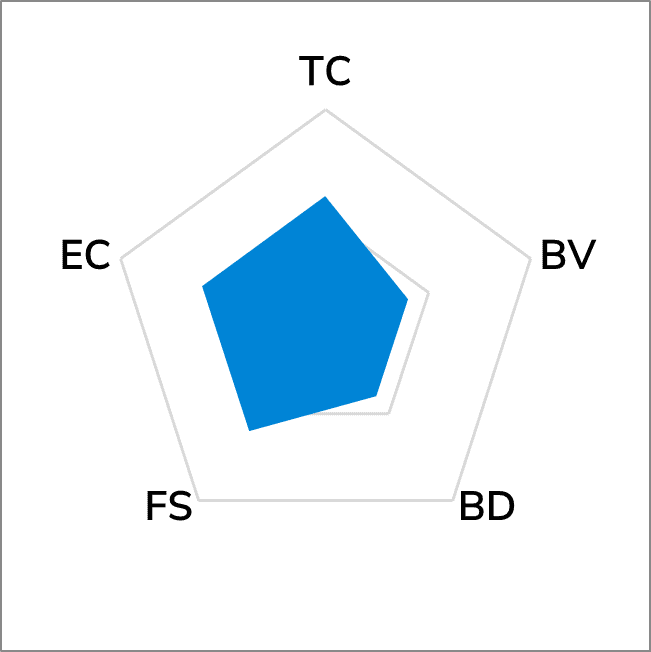 XL-25 Ceramic Heat Spreader | 10 | 0.0239 | 0.5 | 1.89 | 47.5 | 4.13 | Quote & Sample |
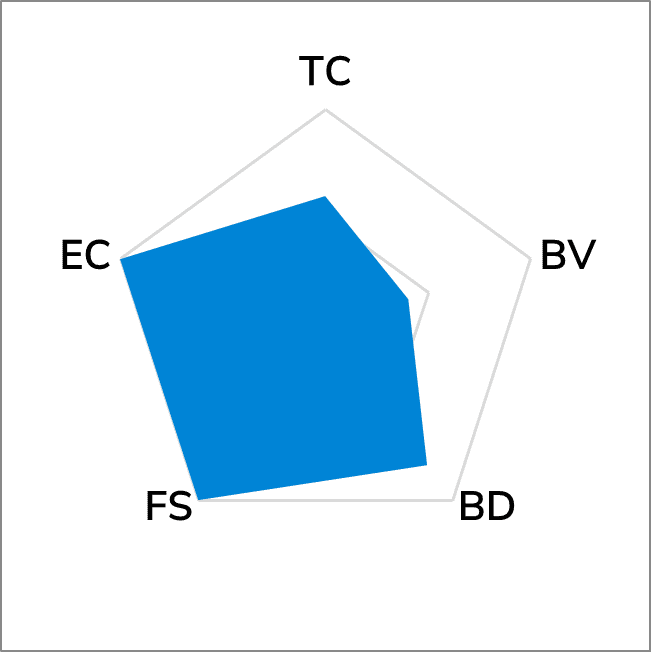 XL-25W Ceramic Heat Spreader | 24~25 | 0.05975 | 15 | 3.8 | 4078.8 | 6.6~8 | Quote & Sample |
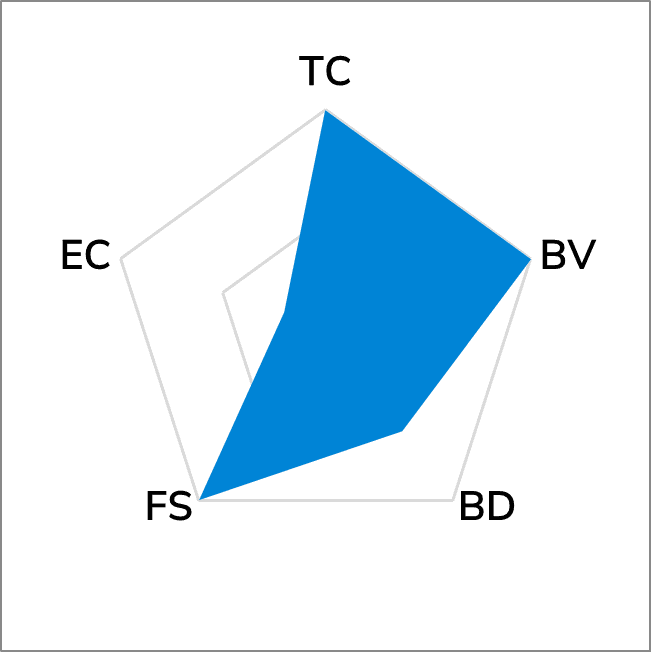 XL-25D Ceramic Heat Spreader | 180~200 | 0.4541~0.5019 | 18.45 | 3.32 | 3416 | 2.805 | Quote & Sample |
| Test Method | ASTM D149 | CNS 619 | CNS 12701 | RT~300゚C | |||
Ceramic heat spreaders are electrically insulating thermal management materials used to transfer and distribute heat away from heat-generating electronic components. Depending on the ceramic composition, they can provide thermal conductivity, dielectric strength, mechanical stability, and low thermal expansion while maintaining electrical isolation.
T-Global USA provides advanced thermal management solutions for electronic, automotive, telecommunications, industrial, aerospace, computing, and other high-performance applications. Our ceramic heat spreader portfolio includes XL-25, XL-25W, and XL-25D, allowing engineers to select materials based on thermal conductivity, dielectric performance, mechanical requirements, operating temperature, and system-level cooling needs.
How Ceramic Heat Spreaders Support Thermal Management
Electronic components generate heat during operation. When heat generation exceeds the ability of the system to dissipate it, junction temperatures can rise and affect performance, reliability, and component life.
Ceramic heat spreaders help create a thermal path away from heat-generating electronic components while also providing electrical insulation. Unlike electrically conductive metallic materials, ceramic heat spreaders can support applications that require both heat transfer and dielectric separation.
Material selection depends on thermal conductivity, heat flux, available installation space, electrical isolation requirements, mechanical loading, airflow, interface resistance, and operating conditions. Materials with higher thermal conductivity can move heat more rapidly, while low thermal expansion can help reduce dimensional mismatch during repeated thermal cycling.
Types of Ceramic Heat Spreaders
T-Global offers three ceramic heat spreader options with different thermal, electrical, and mechanical characteristics.
XL-25 Ceramic Heat Spreader
XL-25 is an open-porous ceramic heat spreader designed to increase the surface area exposed to airflow. Its porous structure allows more air to contact the ceramic material, which can support heat exchange in applications where installation space is limited.
- Thermal Conductivity. XL-25 provides thermal conductivity of 10 W/(m·K).
- Dielectric Breakdown Voltage. The specified dielectric breakdown voltage is ≥0.5 kV/mm.
- Open-Porous Structure. A porosity of 25% increases the amount of ceramic surface exposed to surrounding air.
- Low Thermal Expansion. The linear thermal expansion coefficient is 4.13 × 10⁻⁶.
- High-Temperature Capability. The specified operating temperature is below 500°C.
- Material Composition. XL-25 is based on SiC, Al₂O₃, and SiO₂ ceramic materials.
The open-porous structure increases air-contact area compared with a conventional solid surface. Under suitable airflow conditions, this additional contact area can support improved heat exchange between the ceramic material and surrounding air.
XL-25W Alumina Ceramic Heat Spreader
XL-25W is an alumina (Al₂O₃) ceramic heat spreader designed to provide a balance of thermal conductivity, electrical insulation, mechanical strength, and dimensional stability.
- Thermal Conductivity. XL-25W provides thermal conductivity of 24–25 W/(m·K).
- Dielectric Breakdown Voltage. The specified dielectric breakdown voltage is ≥15 kV/mm.
- High Electrical Resistivity. Volume resistivity is specified at 10¹² Ω·m.
- Mechanical Strength. Flexural strength is specified at 4,078.8 kgf/cm².
- Dimensional Stability. The linear thermal expansion coefficient is 6.6–8 × 10⁻⁶.
- Material Composition. XL-25W uses Al₂O₃ as its main ceramic composition.
XL-25D Aluminum Nitride Ceramic Heat Spreader
XL-25D is an aluminum nitride (AlN) ceramic heat spreader designed for applications that require high thermal conductivity together with electrical insulation.
- High Thermal Conductivity. XL-25D provides thermal conductivity of 180–200 W/(m·K).
- Dielectric Breakdown Voltage. The specified dielectric breakdown voltage is ≥18.45 kV/mm.
- High Electrical Resistivity. Volume resistivity is specified at 1.4 × 10¹³ Ω·m.
- Mechanical Strength. Flexural strength is specified at 3,416 kgf/cm².
- Low Thermal Expansion. The linear thermal expansion coefficient is 2.805 × 10⁻⁶.
- Material Composition. XL-25D uses aluminum nitride as its main ceramic composition.
Among T-Global’s ceramic heat spreader options, XL-25D provides the highest specified thermal conductivity. Its combination of high thermal conductivity, dielectric performance, and low thermal expansion makes it suitable for high-power and high-heat-flux electronic applications.
The XL-25D/XL-25W ceramic heat spreaders are available pre-sized to match common semiconductor power-device package dimensions, including TO-220, TO-247, TO-264, and TO-3P.
| Packaging Spec. | Dimensions (mm) |
|---|---|
| TO-220 | 20 x 14 x 0.635 |
| TO-220 | 20 x 14 x 1.0 |
| TO-220 | 12 x 18.5 x 1.0 |
| TO-247 | 22 x 17 x 0.635 |
| TO-247 | 22 x 17 x 1.0 |
| TO-264 | 28 x 22 x 0.635 |
| TO-264 | 28 x 22 x 1.0 |
| TO-3P | 25 x 20 x 0.635 |
| TO-3P | 25 x 20 x 1.0 |
Choosing Between XL-25, XL-25W, and XL-25D
Selecting a ceramic heat spreader requires balancing thermal performance with electrical, mechanical, dimensional, and system-level requirements.
- XL-25. Suitable for applications that can benefit from an open-porous structure and increased air-contact area. Its thermal conductivity is 10 W/(m·K).
- XL-25W. Provides 24–25 W/(m·K) thermal conductivity together with strong dielectric and mechanical properties. Its alumina composition makes it suitable for many electrically insulated electronic applications.
- XL-25D. Provides 180–200 W/(m·K) thermal conductivity for more demanding high-power or high-heat-flux applications that also require electrical insulation.
The correct ceramic material should be selected based on the complete thermal path rather than thermal conductivity alone. Contact area, interface resistance, airflow, mounting conditions, heat sink performance, component geometry, operating temperature, and environmental requirements can all affect final system temperatures.
Applications of Ceramic Heat Spreaders
Ceramic heat spreaders from T-Global can be used in power electronics, telecommunications equipment, automotive electronics, industrial systems, servers, aerospace electronics, medical equipment, and other applications that require both thermal management and electrical insulation.
Power Electronics
MOSFETs, IGBTs, power modules, converters, and power supplies can generate concentrated heat during operation. Ceramic heat spreaders can help transfer heat away from these components while maintaining electrical isolation between heat-generating devices and surrounding structures.
Telecommunications Equipment
Base stations, networking equipment, RF electronics, and other telecommunications systems combine high component density with continuous operating loads. Ceramic heat spreaders can support thermal management around amplifiers, processors, power devices, and other heat-generating components.
Automotive and EV Electronics
Electric vehicles and automotive systems contain power converters, charging electronics, battery-management systems, inverters, control units, and other thermally demanding components. Ceramic materials can provide electrical insulation while helping manage heat in systems exposed to thermal cycling and changing operating conditions.
Industrial Electronics
Motor drives, industrial power supplies, factory automation systems, robotics, and industrial control equipment may operate continuously under elevated electrical and thermal loads. Ceramic heat spreaders can provide a stable thermal path while maintaining electrical separation.
Servers and Computing Hardware
Processors, accelerators, power-delivery components, and other high-density computing hardware can generate substantial heat within limited enclosure space. High-conductivity ceramic materials such as XL-25D can be evaluated where both heat spreading and electrical insulation are required.
Aerospace Electronics
Aerospace electronic systems may experience significant temperature variation and strict electrical isolation requirements. Ceramic heat spreaders can be considered for suitable avionics, communication, sensing, and control applications when validated against the environmental and reliability requirements of the final system.
Medical and Precision Electronics
Medical imaging equipment, diagnostic systems, laser electronics, power supplies, and precision instruments can contain sensitive circuitry alongside localized heat sources. Electrically insulating ceramic materials can help establish a thermal path while maintaining electrical separation.
Thermal Simulation Support and Material Selection
T-Global’s simulation team models heat flow before physical prototypes are finalized. Thermal simulation can be used to evaluate temperature distribution, thermal resistance paths, airflow, component geometry, and system-level cooling performance.
These results can help engineers compare ceramic materials such as XL-25, XL-25W, and XL-25D based on the actual thermal requirements of the system rather than thermal conductivity alone. After material and design targets are established, T-Global also provides thermal and reliability testing to support validation of thermal, electrical, physical, and reliability requirements.
Frequently Asked Questions About Ceramic Heat Spreaders
What is a ceramic heat spreader?
A ceramic heat spreader is an electrically insulating thermal management material used to transfer and distribute heat away from electronic components. Depending on the ceramic composition, it can provide thermal conductivity, dielectric strength, mechanical stability, and low thermal expansion.
What are ceramic heat spreaders used for?
Ceramic heat spreaders can be used in power electronics, telecommunications equipment, automotive electronics, industrial systems, servers, aerospace electronics, medical equipment, and other applications where heat transfer and electrical insulation are both important.
What is the difference between XL-25, XL-25W, and XL-25D?
XL-25 is an open-porous ceramic heat spreader with thermal conductivity of 10 W/(m·K). XL-25W is an alumina ceramic heat spreader with thermal conductivity of 24–25 W/(m·K). XL-25D is an aluminum nitride ceramic heat spreader with thermal conductivity of 180–200 W/(m·K).
Which ceramic heat spreader has the highest thermal conductivity?
XL-25D has the highest specified thermal conductivity in T-Global’s ceramic heat spreader portfolio at 180–200 W/(m·K). It uses aluminum nitride as its primary ceramic material.
What is the difference between alumina and aluminum nitride ceramic?
Alumina, used in XL-25W, provides a balance of thermal conductivity, dielectric performance, mechanical strength, and dimensional stability. Aluminum nitride, used in XL-25D, provides significantly higher thermal conductivity and a lower specified thermal expansion coefficient, making it suitable for more thermally demanding applications.
Are ceramic heat spreaders electrically conductive?
Ceramic heat spreaders are generally selected because they can transfer heat while also providing electrical insulation. Required dielectric performance should still be verified against operating voltage, material thickness, geometry, environmental conditions, and system safety requirements.
Can ceramic heat spreaders replace aluminum heat sinks?
Not necessarily. Ceramic heat spreaders and aluminum heat sinks can perform different functions within a thermal system. A ceramic heat spreader can distribute heat and provide electrical insulation, while an aluminum heat sink commonly increases surface area to dissipate heat into the surrounding air. The two may also be used together depending on the cooling architecture.
Why does XL-25 use a porous ceramic structure?
XL-25 uses an open-porous structure to increase the surface area exposed to air. The additional air-contact area can support heat exchange with natural or forced airflow under suitable operating conditions.
Can ceramic heat spreaders be used with power semiconductors?
Yes. Ceramic heat spreaders can be evaluated for MOSFETs, IGBTs, power modules, converters, and other power semiconductor applications. Material selection should consider heat flux, electrical isolation, contact resistance, component geometry, mounting conditions, and operating temperature.
How do I choose the right ceramic heat spreader?
The right ceramic heat spreader depends on thermal conductivity, dielectric requirements, heat flux, component geometry, available installation space, operating temperature, interface resistance, mechanical loading, airflow, thermal cycling, and overall system design. T-Global can support material selection through engineering consultation, simulation, and validation testing.
Does T-Global provide thermal simulation for ceramic heat spreader applications?
Yes. T-Global provides thermal simulation services to evaluate temperature distribution, thermal resistance paths, airflow, and other system-level thermal design factors.
Can I request a ceramic heat spreader sample?
Yes. T-Global USA can provide product recommendations and sample support for suitable applications. Request a quote or sample to discuss your thermal, electrical, dimensional, and application requirements.
Contact T-Global for Ceramic Heat Spreaders
Ceramic heat spreaders can provide both heat transfer and electrical insulation for electronic assemblies where conventional conductive materials may not meet all design requirements. T-Global USA offers XL-25 open-porous ceramic, XL-25W alumina ceramic, and XL-25D aluminum nitride ceramic heat spreaders with thermal conductivity ranging from 10 W/(m·K) to 180–200 W/(m·K).
Our engineering team can help evaluate thermal paths, component geometry, operating conditions, electrical isolation requirements, and system-level cooling requirements to identify a suitable ceramic heat spreader for your application.
Request a quote or sample to discuss your ceramic heat spreader requirements.