Thermal Grease
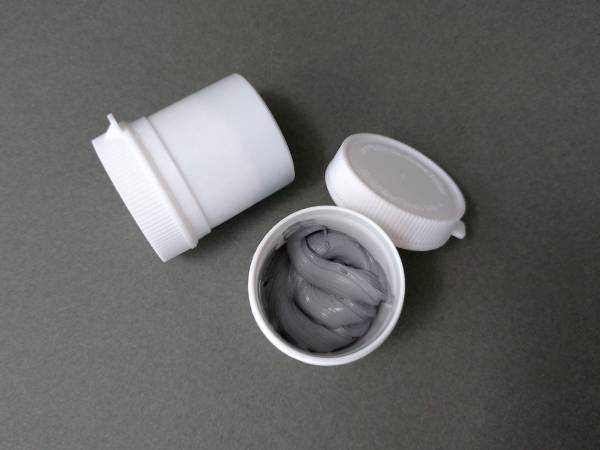
Thermal Grease
Silicone Grease
| Properties | Thermal Conductivity | Thermal Impedance | Viscosity | Density | Volume Resistivity | ||
|---|---|---|---|---|---|---|---|
| Unit | W/m•K | cal/cm·sec·°C | RA(K-in.^2/W) | Pa.s | g/cm³ | Ohm-m | |
 TG-AS808 Thermal Grease | 8 | 0.01912 | 0.683 | 350 | 2.9 | 1013 | Quote & Sample |
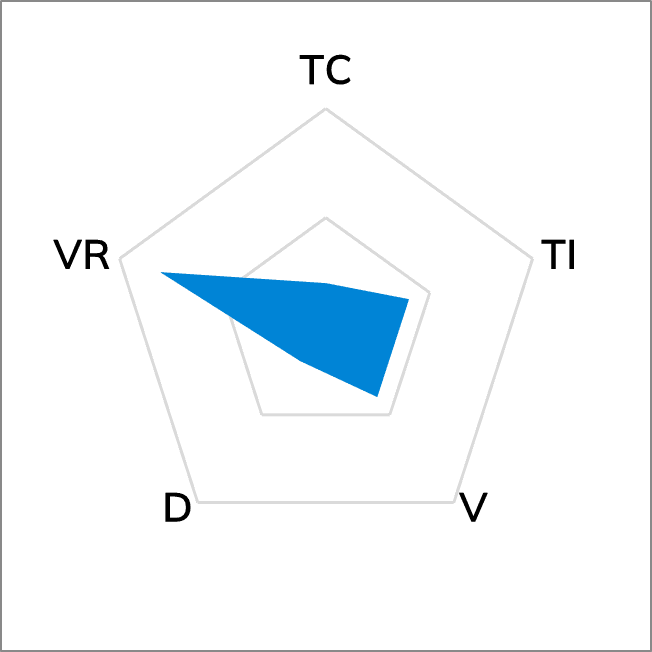 TG-AS606B Thermal Grease | 1.9 | 0.004541 | 0.800 | 200 | 2.2 | 1011 | Quote & Sample |
 TG-AS606C Thermal Grease | 5.3 | 0.012667 | 0.819 | 150 | 2.95 | 1012 | Quote & Sample |
| Test Method | ASTM D5470 Modified | Brookfield | ASTM D792 | ASTM D257 | |||
Non-silicone Paste
| Properties | Thermal Conductivity | Thermal Impedance | Viscosity | Density | Volume Resistivity | ||
|---|---|---|---|---|---|---|---|
| Unit | W/m•K | cal/cm·sec·°C | RA(K-in.^2/W) | Pa.s | g/cm³ | Ohm-m | |
 TG-N909 Non-Silicone Thermal Paste | 9 | 0.02151 | 0.758 | 300 | 2.85 | 1013 | Quote & Sample |
| Test Method | ASTM D5470 Modified | Brookfield | ASTM D792 | ASTM D257 | |||
How Thermal Grease Supports Heat Transfer
Even apparently smooth component and heat-sink surfaces contain microscopic irregularities that can trap air between mating surfaces. Because air has relatively low thermal conductivity, these gaps can increase resistance along the heat-transfer path.
Thermal grease conforms to these surface irregularities and helps improve contact between heat-generating components and cooling surfaces. It is commonly applied between electronic components and heat sinks, housings, cold plates, or other heat-dissipation structures.
Key Characteristics of Thermal Grease
Selecting thermal grease requires consideration of thermal conductivity, thermal impedance, viscosity, density, electrical properties, material formulation, and the geometry of the thermal interface.
Thermal Conductivity
Thermal conductivity, measured in W/m·K, describes a material’s ability to conduct heat through its bulk. T-Global’s currently listed thermal grease and thermal paste grades provide different conductivity levels to support a range of thermal requirements.
Higher thermal conductivity can support heat transfer, but material selection should also consider thermal impedance, interface geometry, application thickness, viscosity, and operating conditions.
Thermal Impedance
Thermal impedance represents resistance to heat transfer through the thermal interface under specified test conditions. It should be considered together with thermal conductivity because actual thermal performance depends on both material properties and the geometry of the interface.
Viscosity
Viscosity affects how thermal grease spreads and behaves during application. Different viscosity levels can support different component geometries, interface conditions, and manufacturing processes.
Density
Density is another material characteristic that can influence material usage and processing considerations. It may also be relevant where total material mass is an important design factor.
Electrical Properties
Volume resistivity is one of the electrical properties specified for T-Global thermal grease grades. Engineers should evaluate electrical requirements according to the operating voltage, interface geometry, application thickness, and system requirements.
Silicone and Non-Silicone Thermal Grease Options
T-Global provides silicone thermal grease and non-silicone thermal paste with different thermal conductivity, thermal impedance, viscosity, density, and electrical characteristics.
Silicone Thermal Grease
- TG-AS808. Silicone thermal grease with thermal conductivity of 8.0 W/m·K.
- TG-AS606B. Silicone thermal grease with thermal conductivity of 1.9 W/m·K.
- TG-AS606C. Silicone thermal grease with thermal conductivity of 5.3 W/m·K.
Non-Silicone Thermal Paste
- TG-N909. Non-silicone thermal paste with thermal conductivity of 9.0 W/m·K.
Common Applications for Thermal Grease
Thermal grease is widely used where electronic components require efficient thermal contact with nearby cooling structures.
Power Electronics
Power semiconductor devices, converters, power supplies, and related electronics can use thermal grease between heat-generating components and cooling surfaces to support heat transfer. Explore T-Global’s energy thermal management solutions for related applications.
Computing and Consumer Electronics
Processors, power devices, computing systems, and other electronic assemblies can use thermal grease where a thin thermal interface is required between components and heat-dissipation structures.
Automotive Electronics
Automotive electronic modules and power electronics can contain thermal interfaces where component and housing surfaces must transfer heat efficiently. Thermal grease can help reduce air gaps at these mating surfaces.
Industrial Electronics
Industrial power supplies, control electronics, power modules, and other heat-generating systems can use thermal grease to improve thermal contact between components and cooling structures.
Key Factors in Selecting the Right Thermal Grease
The appropriate thermal grease depends on the thermal design, interface geometry, manufacturing process, and electrical requirements of the application.
Thermal Performance
Thermal conductivity and thermal impedance should be evaluated together when comparing materials. The overall thermal path, contact surfaces, and applied interface should also be considered.
Application Thickness
Thermal grease is generally used to fill small surface irregularities rather than larger structural gaps. The required interface thickness depends on surface condition, component geometry, assembly pressure, and thermal design.
Material Viscosity
Viscosity affects spreading behavior and material placement. Engineers should select a viscosity that is compatible with the component geometry, interface area, and manufacturing requirements.
Silicone or Non-Silicone Formulation
T-Global offers both silicone thermal grease and non-silicone thermal paste. Material formulation should be selected according to application requirements, processing conditions, and system design considerations.
Frequently Asked Questions About Thermal Grease
What is thermal grease?
Thermal grease is a thermal interface material applied between heat-generating electronic components and cooling surfaces. It helps fill microscopic surface irregularities and reduce insulating air gaps along the heat-transfer path.
What is thermal grease used for?
Thermal grease is commonly used between electronic components and heat sinks, housings, cold plates, or other cooling structures to improve thermal contact and support heat dissipation.
How does thermal grease improve heat transfer?
Thermal grease fills microscopic surface irregularities between mating surfaces and reduces air gaps that can increase thermal resistance. This helps create a more continuous thermal path between the component and cooling structure.
What is the difference between thermal grease and thermal putty?
The main differences between thermal grease and thermal putty are material consistency, suitable gap size, and flow behavior. Thermal grease has a softer, more fluid consistency and is typically used at relatively thin interfaces to fill microscopic surface irregularities. Thermal putty has a thicker consistency and is better suited to larger or more variable gaps and uneven component geometries where greater gap-filling capability is required.
Does T-Global offer silicone and non-silicone thermal grease?
Yes. T-Global offers silicone thermal grease grades including TG-AS808, TG-AS606B, and TG-AS606C, as well as the TG-N909 non-silicone thermal paste.
Which T-Global thermal grease has the highest thermal conductivity?
Among the currently listed materials, TG-N909 non-silicone thermal paste has the highest specified thermal conductivity at 9.0 W/m·K. Among the silicone thermal grease grades, TG-AS808 provides 8.0 W/m·K.
What thermal conductivity range is available?
T-Global’s currently listed thermal grease and thermal paste grades range from 1.9 W/m·K to 9.0 W/m·K.
Why is viscosity important when selecting thermal grease?
Viscosity affects material spreading and application behavior. The appropriate viscosity depends on the interface area, component geometry, application method, and manufacturing requirements.
What factors should I consider when selecting thermal grease?
Engineers should consider thermal conductivity, thermal impedance, viscosity, density, electrical properties, silicone or non-silicone formulation, interface geometry, application thickness, and the overall thermal path.
Can I request a thermal grease sample?
Yes. T-Global USA provides product recommendation and sample support for suitable applications. Request a quote or sample to discuss your thermal performance and material requirements.
Improve Thermal Contact with T-Global Thermal Grease
T-Global thermal grease provides a practical solution for improving heat transfer across thin interfaces between electronic components and cooling surfaces.
Our silicone and non-silicone materials provide different thermal conductivity, thermal impedance, viscosity, density, and electrical characteristics to support a range of electronic applications. Request a quote or sample to evaluate a suitable material for your application.