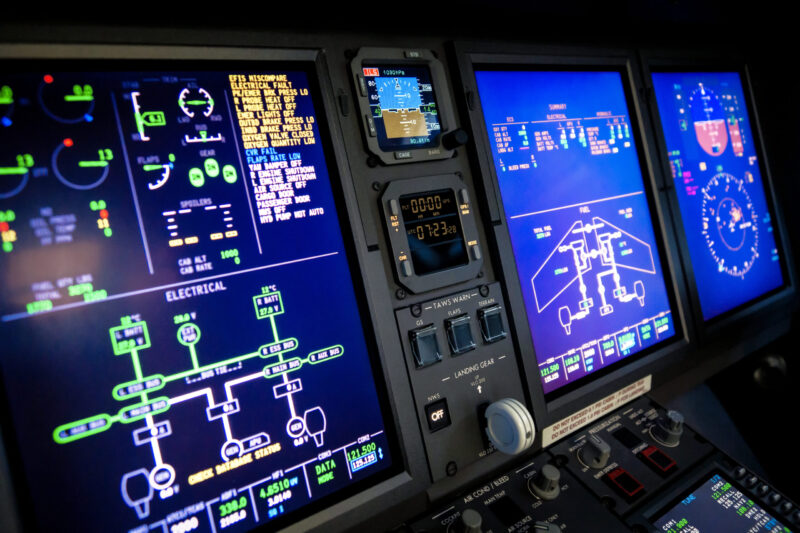
In avionics, thermal management solutions are integral to safe and efficient operations. They help sensitive electronics remain within temperature limits, reduce hotspot risk, and support component life even under thermal cycling and vibration.
T-Global USA specializes in advanced thermal interface materials (TIMs) that are engineered for flight-critical systems. To help your team navigate these challenges, we’ve created a practical guide to cooling avionics, covering how our TIMs support consistent quality, help minimize outgassing risk, and maintain stable performance when it matters most.
The Thermal and Environmental Challenges of Avionics
Harsh Operating Conditions
Many flight-critical systems and equipment endure harsh operating conditions. Inclement weather, repeated exposure to rain, and other factors can degrade systems over time, with extreme temperature fluctuation potentially occurring in these environments. Thermal interface materials are available in grades designed for demanding temperature environments, serving to keep systems functioning optimally, especially for integrated circuits.
Limited Space and Weight Constraints
Aircraft systems require strict weight reduction to improve fuel efficiency. At the same time, avionics components are densely packed. As a result, designers have limited space for traditional heat sinks or bulky cooling solutions. To address these challenges, T-Global provides custom-cut thermal pads, adhesive backing options, and specialized post-processing services designed to fit complex geometries and confined spaces. These solutions support thermal performance without compromising design flexibility or weight requirements.
High Heat Loads Dissipation
Dissipating high heat loads is another challenge, particularly when managing extreme temperature fluctuations. Lower operating temperatures can help support device reliability, service life, and performance. These advantages make it important to implement effective thermal management for avionics systems that can help maintain stable operating temperatures.
Specialized TIM Solutions for High-Reliability Avionics
Selecting a thermal interface material requires balancing thermal performance, weight, power consumption, and cost. Each factor can affect overall system reliability. To meet the specific needs of avionics systems, T-Global offers multiple TIM solutions designed for the demanding requirements of avionics systems. Our selection includes the following:
- Ultra-soft thermal pads. To protect highly sensitive components and systems, you may want to use ultra-soft thermal pads, which T-Global can provide in both silicone and silicone-free versions based on your specific cooling requirements. These products consist of ultra-soft materials and a range of tackiness levels, with the ability to help reduce operating temperatures while providing physical protection. To fit limited spaces and complex designs, we also offer custom cutting methods, adhesive options, and additional post-processing services for thermal pads.
- Graphite films. Natural and synthetic graphite sheets optimize both thermal conductivity and flexibility. Their thermal conductivity varies based on the specific requirements of their structure and manufacturing process. Thin and lightweight options are available from T-Global for use in compact devices operating at high power levels.
- Silicone-free thermal putty. Silicone-free thermal putty can support sensitive electronics in aircraft. Using silicone-free materials can help minimize silicone-related contamination concerns, including the release of volatile compounds such as silicone oil.
- Thermal tapes. Another option available at T-Global is our selection of high-viscosity thermal tapes, which can fill gaps and dissipate heat by transferring it to heat sinks. This option may work better for your system if you need a reliable adhesive.
The Assurance of Custom Thermal Engineering and Testing
Custom thermal management interfaces that are engineered for specific thermal and environmental conditions help avionics companies address demanding application requirements. T-Global provides dependable TIM solutions that utilize standard methods for testing and engineering to support reliable operation of aircraft systems. As a result, our customers benefit from application-specific materials and engineering support for challenging aircraft environments.
Turn to T-Global for Thermal Management for Avionics
If you’re searching for thermal interface materials for demanding avionics applications, from silicone-free thermal compounds to graphite films, we can help support your systems’ longevity and performance. Choose from our full range of product options, which we can customize based on your individual requirements. We also offer additional solutions that can help you get the most from our products, including custom thermal modules, cutting and other post-process solutions, and testing services that support demanding application requirements. We share your commitment to quality, environmental responsibility, and material safety for demanding applications.
Frequently Asked Questions About Thermal Management for Avionics
Why is thermal management important for flight-critical avionics?
Thermal management helps avionics electronics remain within appropriate operating temperature ranges, reducing hotspot risk and supporting long-term reliability in demanding flight environments.
Which TIM options are commonly used in avionics thermal management?
Common thermal interface material options include ultra-soft thermal pads, graphite films, silicone-free thermal putty, and thermal tapes, depending on the application’s space, weight, heat transfer, and material requirements.
How can silicone-free thermal putty support avionics applications?
Silicone-free thermal putty can help reduce silicone-related contamination concerns in sensitive electronics while filling gaps and supporting heat transfer between components and heat-spreading surfaces.
Can thermal interface materials be customized for limited avionics spaces?
Yes. Thermal pads and related materials can be custom cut or processed with adhesive backing and other options to fit compact layouts, complex geometries, and weight-sensitive avionics designs.
Submit your request today for a quote or a sample! We’ll be ready to match you with the right solution.